Today, on the little side of the internet that we find ourselves in, we talk about words. Why? Because this is MY side of the internet and I wanted to talk about words! (also words are fun and made this whole article possible) (thanks words)
First, a definition
What is a word?
According to the Cambridge Dictionary a word is “a single unit of language that has meaning and can be spoken or written”. It isn’t the only meaning of word in the English language, but it is the meaning I will be concentrating on as the others are less relevant to my current rambling.
According to Wikipedia, there is in fact no proper consensus between linguists about the proper definition for word in terms of linguistics, so I leave you with the page with all the discussion and various sources about what is a word according to various sources. It is a fascinating topic in itself, but I have to stop somewhere, otherwise this rabbithole is never going to end and I will never post anything on this blog.
As a side-note (and this will probably be filled with a lot of side-notes), some things can be words but still not feel very word-like in my opinion. For example, words that are hyphenated feel like many words to me (like single-minded, self-service, mother-in-law and so on), not like a single word. Even though they fully enter the definition of the Cambridge dictionary.
Words as meaning
Words have meaning, obviously, it’s in the definition, but some words are very specific in meaning and others are more general and that is a big part of what makes language fascinating and varied, is how detailed or vague we can be in our expression. It all depends on how much we want to put an emphasis on something, or how we want to skim over details.
There is also the amazing effect called semantic drift, where a word will change meaning through usage, and it gets another meaning. Sometimes it replaces the original meaning completely, even going in the complete opposite direction. Like terrific meaning something inspiring terror and now is often used for something good. It is fascinating because it is something that can be observed in real life.
Words as sounds
Some words to me are funny or interesting just because they sound peculiar. Either the sounds they are composed of make for a funny noise (which is most definitely very subjective), or they feel very easy to speak.
Like shenanigans is a very fun word, both in meaning, and in sounding. Why? Because it feels that way to me. Feel free to share your fun words if you don’t like mine! It won’t make me change my mind but maybe I’ll add to my list!
Words as history traces
Words usually have a story of how they came to be and how they came to stay in the language, and we tend to study it in its own topic, etymology. It is a fully fascinating topic in itself because you can find a lot of history and a lot of small details in some words. Like the amount of words that have been introduced by Shakespeare in English 1 is amazing, but also some words coming from other languages through borrowing mark the exchanges between cultures.
From words in a language plainly adapted into another like vasistas(French wikipedia, the english explanation would be here), being a transliteration into French of the German Was ist Das ?, to loanwords like taksi in Finnish, we see the traces of exchanges between populations into the language themselves. It’s also sometimes a nice clutch for people who have a basic level in a language, to be able to borrow words from another language and understand them easily.
It also leads to false friends, as some words may be very similar but have very different origins and meanings that would turn a sentence upside down from its original meaning in the speaker’s mind. An example that drove me a bit crazy when first learning English was actually not meaning actuellement at all in French. Actually means En fait, and actuellement would be currently. The number of times I used them wrongly is disappointing to me!
My Favourite words
Maybe it is the remnants of having spent a lot of time reading and studying linguistics and languages, but I do have favourite words in various languages, for different reasons.
I really like shenanigans in English, as mentioned earlier for its peculiar sound and fun aspect in its meaning, that I feel is reflected in the sound of it.
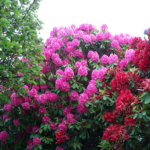
For French, rhododendron is one I really like, one because it makes for pretty flower bushes, and two because it is a bit raspy to sound out and almost sounds unreal to me. I am pretty certain I could find other words like that if I spent enough time on it.
In German I enjoy Waldeinsamkeit a lot, mostly for its meaning that has no one word equivalent in other languages, because I too feel the need to be alone in the woods, quite often. Maybe it is the Bear in me that speaks like that.
I could keep writing more words to add to this wordy page on words, but I feel like I have taken enough of your time if you have read all this, and enough of my time to post these rambling thoughts. Therefore, I free you from this page and bid you a beary good time!
- for words introduced by Shakespeare, https://www.shakespeare.org.uk/explore-shakespeare/shakespedia/shakespeares-words/ ↩︎
